
Beginner's Guide to Silver Jewellery Making
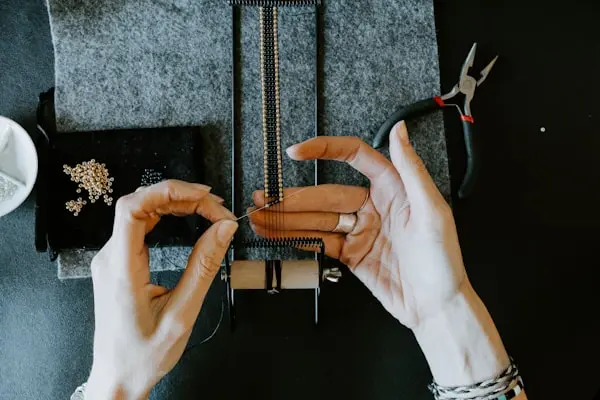
Silver jewellery making is one of the most approachable metal crafts for a beginner. Silver is soft enough to cut, bend and file with hand tools, it is far cheaper than gold to practise on, and the techniques you learn on silver (sawing, filing, soldering, polishing) carry over directly to gold work later. This guide covers what you need to know before you make your first piece.
Understanding the silver you will work with
Silver used in jewellery is usually sold by purity:
- Fine silver (99.9%) is very soft. It is good for wire wrapping, bezels and pieces that will not take much wear, but it bends and scratches easily.
- Sterling silver (92.5%) is silver alloyed with 7.5% other metal, usually copper. The alloy makes it harder and more durable, which is why most payal, chains and rings are made in 925 sterling.
- Lower-purity silver is used in some traditional and commercial work. It is harder still but tarnishes faster and is less valuable.
As a beginner, buy small quantities of sterling sheet and round wire in two or three common thicknesses from a reputable bullion or findings supplier, and always ask for the purity in writing on the bill.
The basic workflow of a silver piece
Almost every handmade silver piece follows the same order of steps:
- Design: sketch the piece at actual size and decide the wire or sheet thickness.
- Measure and mark: mark your cut lines with a scriber or fine marker. Measure twice; silver is costly to waste.
- Cut: use a jeweller's saw frame for sheet and flush cutters for thin wire.
- Shape: bend with pliers, form rings on a ring mandrel, and dome or curve sheet with a wooden or nylon mallet.
- File and sand: remove saw marks and sharp edges with needle files, then smooth with progressively finer emery paper.
- Join: close jump rings neatly, or solder joints that need strength.
- Clean: remove fire scale and flux residue after soldering (pickling).
- Finish and polish: give the piece its final shine or matte texture.
Annealing: why silver gets hard as you work it
When you bend, hammer or twist silver, it becomes harder and springier. This is called work hardening. If you keep working it, it can crack. Jewellers fix this by annealing: heating the metal evenly with a torch until it shows a dull glow in dim light, then letting it cool or quenching it in water. Annealed silver is soft again and easy to shape. Learn to recognise when your wire starts resisting the pliers; that is the signal to anneal.
Soldering basics
Soldering joins two pieces of silver using a silver solder alloy that melts at a lower temperature than the piece itself. Solder is commonly sold in grades such as hard, medium and easy, each melting at a slightly lower temperature. Use hard solder for the first joint and easier grades for later joints, so earlier joints do not reopen. Good soldering depends on three things: clean metal, joints that fit with no gap, and heating the whole piece rather than only the solder.
Safety in a home workshop
- Work on a heat-proof surface such as a soldering block, away from curtains and paper.
- Keep the room ventilated when soldering and pickling, and keep a container of water nearby.
- Wear safety glasses when sawing, cutting wire and using a polishing motor.
- Tie back long hair and avoid loose sleeves near rotating tools.
- Store pickle, flux and other chemicals labelled and out of reach of children.
A good first project
A simple sterling silver ring band or a pair of wire earrings is the best first project. It uses every basic step (measuring, cutting, shaping, soldering and polishing) without needing stone setting. Once you can make a band with an invisible solder joint, you are ready for chains, payal links and more detailed designs.
Common beginner mistakes
- Skipping filing and trying to hide rough edges with polish.
- Leaving gaps in a joint and expecting solder to fill them.
- Overheating one spot until the silver melts.
- Buying too many tools before learning which ones you actually use.
Learning step by step
Silver work is learned by doing. Watching each step closely and then repeating it on scrap metal builds skill faster than reading alone. RPJ Making's online jewellery making courses teach these steps in Hindi through recorded video lessons, including payal, chain and modern designs. If you are not sure where to start, see our guide to the essential tools or contact us for course guidance.